Services
Robotics & automation expertise — across every layer of your operation.
From sensor-level signals to enterprise systems, we advise on the full ISA-95 stack and select the right technology for the right problem.
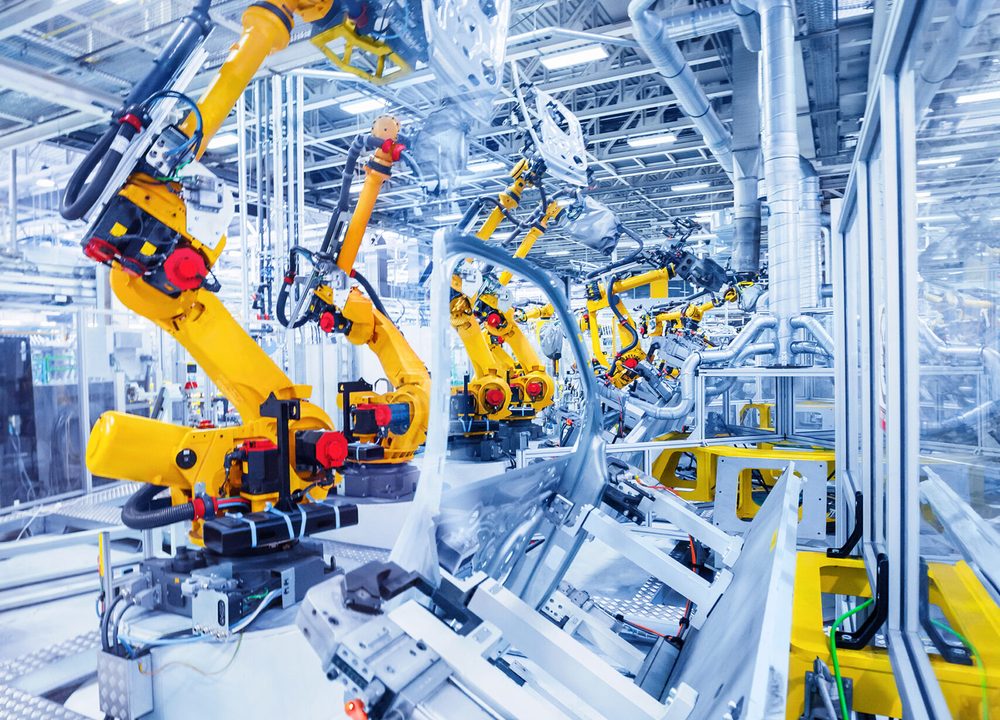
From sensor-level signals to enterprise systems, we advise on the full ISA-95 stack and select the right technology for the right problem.
Our expertise lives in the bottom three layers — field devices, controls, and supervisory systems. That's where automation succeeds or fails.
Vendor-neutral evaluation across the major platforms and emerging entrants.
Six-axis arms, SCARA, delta, and collaborative robots. FANUC, ABB, KUKA, Yaskawa, Universal Robots.
Autonomous mobile robots and automated guided vehicles for material handling and intralogistics.
Inspection, guidance, and AI-powered defect detection — Cognex, Keyence, and open platforms.
Rockwell, Siemens, Beckhoff, Mitsubishi — standardized architectures across plants.
Real-time visibility, OEE, traceability. Ignition, Wonderware, AVEVA, custom integrations.
Anomaly detection, predictive maintenance, computer vision — applied where they actually pay back.
We use a structured supplier selection matrix that weighs application suitability, standardization feasibility, total cost of ownership, and long-term supportability. No favorites, no commissions, no kickbacks — just the right fit.
| Criterion | Weight |
|---|---|
| Application Suitability | 25% |
| Standardization | 20% |
| Total Cost of Ownership | 20% |
| Service & Support | 15% |
| Integration Risk | 10% |
| Roadmap & Innovation | 10% |
| Benefit | How automation helps |
|---|---|
| Efficiency & Speed | Robots and automated lines run continuously, reducing cycle times and increasing output without adding labor hours. |
| Consistency & Quality | Automated systems perform tasks with precise repeatability, reducing defects, scrap, and rework. |
| Cost Reduction | Lower labor costs for repetitive tasks, fewer errors, reduced waste, and optimized energy usage. |
| Scalability | Production ramps quickly by increasing machine utilization rather than hiring and training new staff. |
| Predictive Maintenance | Sensors and automation platforms detect wear or anomalies early, preventing costly downtime. |
| Improved Safety | Automation removes workers from hazardous tasks — heavy lifting, toxic environments, repetitive strain. |
| Real-Time Visibility | IoT, MES, and SCADA platforms provide live data on throughput, machine health, and bottlenecks. |
| Supply Chain Stability | Automated processes reduce variability, making forecasting and inventory planning more accurate. |
| Customer Satisfaction | Faster lead times, fewer defects, and more reliable delivery windows. |
| Regulatory Compliance | Automated logging and traceability simplify audits — ISO, OSHA, FDA, and more. |
We'll spend 30 minutes on a call, look at your application, and tell you honestly whether automation is the right answer.
Get an Honest Assessment